Discover the Advantages of Real Estate Green Building Certifications

Written By
Admin User
Modified On
March 18, 2026
Reading Time
1 Min Read
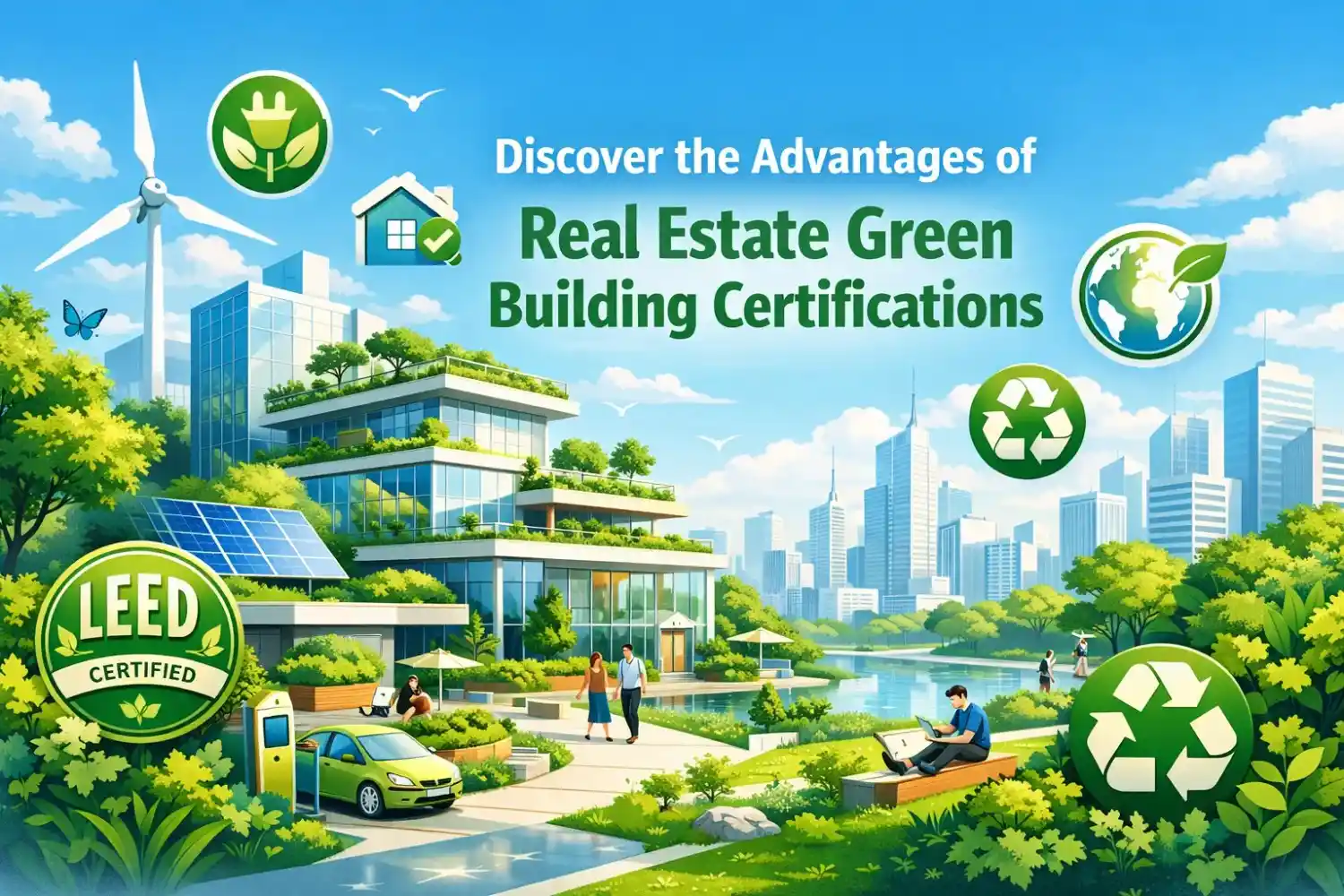
It must be amazing to live in a verdant aura, doesn't it? The majority of people nowadays are making an effort to live more sustainably so that they can help the environment. The need for sustainable construction approaches has been greatly acknowledged in response to the threats presented by climate change, environmental deterioration, and resource depletion. Certifications for ecologically responsible and resource-efficient construction practices have grown in importance as a means of promoting sustainability in the real estate industry. Examining green building certifications—what they are, how to get them, and what it takes to get them—is the goal of this post.
Green building certification is what?
The environmental sustainability and performance of a building can be confirmed by green building certification, which is a third-party verification process. Numerous factors, such as water conservation, indoor air quality, energy efficiency, and sustainable building materials, are considered by certification programs when evaluating structures. The same holds true for building owners and developers; by getting certified, they show that they care about sustainability and the environment.
The Preeminent International Organizations for Green Building Certification
Green building certification programs are offered by a number of international bodies. Furthermore, a few of the most prominent organizations that provide certification for green buildings are:
Environmental and Energy Efficiency Design (LEED)
Among the most prestigious green building certification programs in the world, Leadership in Energy and Environmental Design (LEED) was created by the US Green Building Council (USGBC). Acquiring credits for meeting certain sustainability criteria is the basis of the Leadership in Energy and Environmental Design (LEED) green building certification in India.
Building Research Establishment Environmental Assessment Method, or BREEAM, A certification program that assesses the sustainability performance of a building is BREEAM, which is located in the United Kingdom. A building's energy efficiency, water conservation, and waste management practices are among the many environmental impacts that go into earning a BREEAM certification.
The WELL Building Standard
One certification program that aims to improve the health of building occupants is the WELL Building Standard. The International WELL Building Institute (IWBI) also established the WELL certification standards, which prioritize the use of natural light, physical activity, and indoor air quality.
Aiming for Enhanced Design Efficiency, or EDGE
The International Finance Corporation established the EDGE certification program. Buildings that reduce their energy, water, and material consumption by 20% compared to conventional buildings are recognized with the EDGE certificate.
Veggie Balls
One system for certifying a building's eco-friendliness and energy efficiency is Green Globes. A comprehensive assessment of a building's impact on the environment is also the foundation of Green Globes certification, which was established by the Green Building Initiative (GBI).
Certifying a Green Building Within India
Developers and builders in India can choose from a number of certification schemes that promote environmentally friendly building practices. In India, you can find green building certifications such as:
Credential from the Indian Green Building Council (IGBC)
A non-governmental organization (NGO) in India, the Indian Green Building Council (IGBC) advocates for green building practices across the country. The International Green Building Council's green building certification program uses a point system in which structures earn points for meeting various sustainability standards.
Green Rating for Integrated Habitat Assessment, or GRIHA from now on
Green Ratings for Green Homes (GRIHA) is a system that ranks green buildings throughout India. Furthermore, GRIHA certification was established by the Ministry of New and Renewable Energy (MNRE) to evaluate structures according to their ecological sustainability and energy efficiency.
Energy Efficiency Assessments by the BEE
Promoting energy efficiency in India is the responsibility of the Bureau of Energy Efficiency (BEE), a government entity. An improved performance is shown by a better BEE rating, which measures the energy efficiency of a building.
Energy Performance Index, abbreviated EPI
A certification technique that evaluates the energy efficiency of buildings in India is the Energy Performance Index (EPI). In order to get an EPI certification, a building must undergo a comprehensive assessment of its energy use and efficiency systems.
Green Building Accreditation
In India, the goal of the Eco-Housing Certification program is to promote environmentally friendly home practices. The Ministry of Housing and Urban Affairs (MoHUA) developed EcoHousing Certification to evaluate buildings according to their social responsibility, energy efficiency, and environmental sustainability.
Certification for Green Buildings: What You Need to Know
Every green building certification scheme has its own set of requirements. To provide one example, in order to be recognized as green, a building must meet a number of general conditions. Important requirements include:
Energy Efficiency Regulations
One of the main requirements for green building certification is energy efficiency. Minimal efficiency and energy-saving standards for buildings must be met. Optimal design of the building envelope, installation of high-performance HVAC systems, and energy-efficient lighting (like LED lights) are all part of this. By taking these measures, the building's total energy consumption is reduced, leading to a decrease in operational costs and its carbon footprint. The building's reliance on nonrenewable energy sources and emissions of greenhouse gases can be diminished with efficient energy utilization.
Eco-Friendly Construction Supplies
Sustainable materials having less of an impact on the environment are required for green construction certifications. Materials sourced locally, those made from renewable resources, and those that have been recycled all contribute to a reduction in emissions caused by transportation. Certified timber from responsible forestry techniques is one example of a sustainably sourced resource that is promoted. Utilizing these materials encourages a circular economy, reduces waste, and delays the loss of natural resources. Using sustainable materials in construction helps lessen the industry's impact on the environment and ensures the longevity of the building itself.
System for the Management of Water Resources
To be certified as a green building, water efficiency must be met. Waste water and water can't coexist in buildings; water management systems are a need. To accomplish this, one must install water-saving fixtures such as low-flow faucets, shower heads, and toilets. Other common sustainable building strategies include rainwater harvesting systems and greywater reuse, which enable water to be recovered for non-potable uses like irrigation and toilet flushing. These innovations help the building use less water from the city, which saves money and helps preserve a precious resource. In regions experiencing water scarcity or drought, effective water management is of the utmost importance.
Improving the Indoor Air Quality
Upholding high standards of indoor environmental quality (IEQ) is fundamental to green building practices, which aim to protect the health and well-being of building occupants. To keep interior air quality good and pollutant concentrations low, there must be adequate ventilation to provide a constant flow of fresh air. Improving the indoor environmental quality also includes making the most of natural light, which has positive effects on people's moods and productivity. To maintain safe levels of air pollutants such carbon dioxide, radon, and volatile organic compounds, air quality monitoring is essential. Everyone who lives or works in the building benefits from these features since they make the space more comfortable and healthier.
Long-Term Viability of the Site
Reducing the environmental impact of a building's location and its surrounding area is the goal of site sustainability. This includes preserving biodiversity in all aspects of construction, reducing negative impacts on the local environment, and preserving preexisting natural habitats. Another goal of environmentally friendly site operations is to lessen the amount of stormwater runoff that might pollute and flood nearby water sources. Permeable pavement, green roofs, and rain gardens are some of the methods that can be used to effectively manage stormwater. By avoiding environmentally sensitive locations and seamlessly blending with their natural surroundings, green buildings reduce their environmental impact. There are cases where this might be therapeutic.
Management of Waste
Minimizing garbage production throughout construction and the building's lifetime is an important part of waste management in green buildings. It is possible to lessen construction waste by recycling programs, composting efforts, meticulous planning, and appropriate material choices. It is also recommended that buildings use strategies to reduce operational waste, such as making more use of recyclable or compostable materials. In addition to reducing a building's environmental impact, sustainable waste management practices encourage reusing and recycling materials instead of sending them to landfills.
Criteria Unique to Certification
Green building certification programs like LEED, BREEAM, and WELL each have their own unique set of requirements that aim to promote sustainability in various aspects of a building's design and operation. Energy efficiency, water conservation, sustainable materials, and occupant health are the primary goals of all certification schemes. However, the specific standards for certification can differ. In contrast to WELL's emphasis on occupant welfare through improved air and water quality, illumination, and fitness, LEED may place a premium on energy efficiency and the use of renewable energy sources. Innovation and enhanced performance in areas like social sustainability, building performance, and design creativity are also encouraged by certification-specific standards. In addition to ensuring compliance, these standards push for sustainable building excellence on the part of building operators and designers.
What to Look for in a Reliable Green Building Certification?
Choosing the finest green building certification from the many available alternatives could be challenging. The following considerations should guide your selection of a certification program:
Purpose and goals of the project: Establish clear sustainability targets for your project. Furthermore, different certification methods place varying priorities on different areas of sustainability.
Structure and where it is located: Think about the type and location of the structure. Some certification programs work better with certain kinds of buildings or in certain kinds of places.
Degree of accreditation: Pick the level of certification that best suits your needs. From entrylevel to advanced, some programs provide a range of certifications.
Fees and costs: Keep in mind that certification comes with its fair share of costs, including registration, documentation, verification fees, and such.
Trustworthiness and renown: Think about the certification program's standing in the industry and among stakeholders. Think about how experts in the field feel about it as well.
A Comprehensive Guide to Certification
The certification process is typically a part of these steps:
Step 1: In the registration process, is to submit your project to the certification program that best suits your needs.
Step 2: Gather and send in all required paperwork, including specifications, design plans, and operating data.
Step 3: Site inspections, audits, or reviews of the submitted papers may all be part of the verification phase. In addition, this method guarantees an exhaustive assessment.
Certification: The next stage is to acquire certification once the verification procedure is successfully completed.
Keeping your certification current requires ongoing reporting and monitoring of the building's performance.
Getting Your Building Certified for Green Can Help
Certification as a green building in India has many advantages, such as:
- Environmental advantages include less water use, less trash, and lower energy consumption. Boosted property value, reduced operational costs, and greater tenant productivity are all positive economic outcomes.
- Benefits to society include healthier occupants, higher levels of community engagement, and better indoor air quality.
- Several advantages accrue to the market, such as increased marketability, positive brand perception, and market distinction.
Conclusion
In conclusion, achieving green building certification is an eco-friendly step towards creating long-lasting and considerate buildings. Developers, architects, and builders may make better judgments and add to a more sustainable built environment if they are knowledgeable about the many certification schemes, requirements, and benefits. As we embark on a path towards ecofriendly living, let's show our support for Mother Nature and celebrate your love for nature by teaming up with the Confident Group.
Admin User
Author

Recent Post

Real Estate Referral Income: A Complete Guide...
March 18, 2026
How to Earn Money Without Investment in 2026: A Complete Guide for Beginners
March 18, 2026
A Beginner's Guide to Making Money Online in India
March 18, 2026
What is Referral Income? Full Guide to make referral income in India
March 18, 2026
Commercial Real Estate Segmentation in Delhi-NCR: From Demographics to Psychographics
March 18, 2026
A Road Network Map of Uttar Pradesh Featuring Fifteen or Motorways
March 18, 2026
Average Cost of Residential Construction in India
March 18, 2026
What is a Fard in Real Estate | How to Obtain It and What It Means?
March 18, 2026